A beginner’s guide · about 7 minute read
Starting a blog is cheap. Making it profitable is the hard part. Most blogs earn nothing because they pick a topic with no buyers, publish without a plan, or quit after a few months. The first $1,000 is an achievable milestone if you treat the blog like a small business and focus on readers who are ready to spend money.
Be realistic: for most beginners this takes somewhere between four and twelve months of steady work. Some get there faster by combining a blog with services or a product. Here is how to do it.
1. Choose a niche that can actually make money
A good niche sits where three things overlap: a topic you can write about consistently, an audience with a real problem, and products or services people already pay for. Personal finance, software, fitness, parenting, travel gear, pets and career advice all qualify. Broad topics such as “lifestyle” are hard to rank for, so narrow down. “Budget meal prep for busy nurses” beats “healthy food.”
2. Validate before you build
Spend a week researching. Search your topic in Google and note whether the results include product reviews, affiliate sites and ads, since that signals money. Check free keyword tools to see what readers type. Look at competing blogs and ask whether a newer site could realistically compete. If you can find at least 30 specific questions your audience asks, you have enough material to start.
3. Set up your blog properly
Keep the setup simple and professional.
- Platform: WordPress.org on your own hosting gives you the most control over ads, plugins and affiliate links.
- Domain: Choose a short, memorable name you can grow with. Avoid hyphens and numbers.
- Hosting: A reliable shared host is enough at the start. Expect a modest yearly cost.
- Theme and speed: Use a clean, fast, mobile-friendly theme. Slow sites lose readers and rankings.
- Essential pages: About, Contact, Privacy Policy and an affiliate disclosure. Ad networks and affiliate programs often require them.
4. Plan content around buyer intent
Not all posts are equal. Informational posts such as “what is a Roth IRA” bring readers but rarely sales. Buyer-intent posts such as “best budgeting apps compared” or “X vs Y review” attract readers close to a purchase. Aim for a balance. Start with ten to fifteen posts, with about half focused on comparisons, reviews, tutorials and “best of” guides. Group related posts together and link them, so readers and search engines see you as an authority on the topic.
5. Write posts people finish reading
Answer the reader’s question quickly, then add depth. Use clear headings, short paragraphs, examples and your own experience. Original screenshots, tests and personal opinions set you apart from generic AI-written content. Aim for posts that are genuinely better than the top results: more current, more specific or easier to follow. Quality matters more than volume, but you do need consistency. Two good posts a week for six months beats twenty rushed posts in one week.
6. Learn the SEO basics
Search engines are the main free traffic source, although they take time. Use one main keyword per post, include it in the title, first paragraph and a heading, and write a clear meta description. Add internal links between related posts, compress images, and make sure every page loads quickly on a phone. Be patient: new blogs often see little traffic for the first three to six months.
7. Promote your blog while SEO builds
Do not wait for Google alone. Share posts on Pinterest if your niche is visual, join relevant communities where you can genuinely help, and answer questions on forums with a link only when it adds value. Most importantly, start an email list on day one. Offer a free checklist or guide in exchange for email addresses. Email subscribers are far more likely to click, buy and return than casual visitors.
8. Monetize in the right order
You do not need thousands of visitors to earn your first dollars.
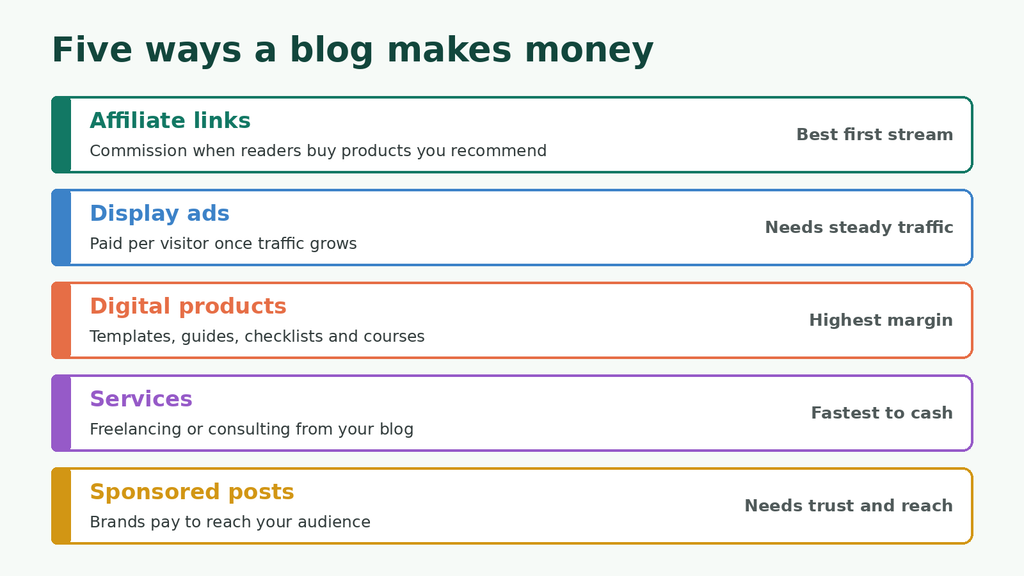
- Affiliate marketing: Recommend products you have used and earn a commission per sale. Join programs such as Amazon Associates or direct company programs. Always disclose links honestly.
- Services: Offer freelance writing, coaching or consulting. A single client can equal months of ad income.
- Digital products: Create a template pack, workbook or short course solving one specific problem.
- Display ads: Networks such as Mediavine and Raptive require meaningful monthly traffic, so treat ads as a later stage.
- Sponsored posts: Brands pay once you have an engaged audience. Clearly label sponsored content.
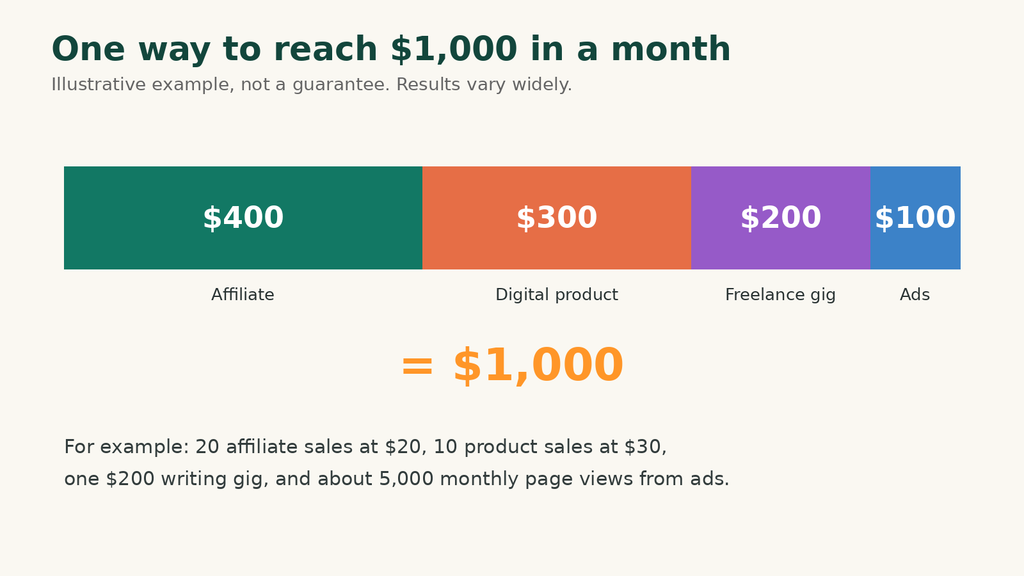
9. What reaching $1,000 can look like
Income comes from a mix of streams, not one miracle source. The example below shows one possible month. Your mix will differ depending on your niche and audience, and many blogs take longer.
10. Track what works and improve old posts
Connect Google Search Console and a simple analytics tool from the first week. Each month, look at which posts get impressions but few clicks, and rewrite their titles. Check which posts send readers to affiliate links or your email form, then write more like them. Updating a post that already ranks, with fresh examples, better images and clearer answers, often brings more traffic than writing a new one. This habit is what separates blogs that plateau from those that keep growing.
11. Build trust, because trust sells
Readers buy from people they believe. Share what you tested, what failed and who a product is not right for. Recommending fewer products honestly will earn more over time than listing everything with a link. Reply to comments and emails, and ask readers what they struggle with. Their answers become your next posts, your lead magnet and eventually your first product.
12. Mistakes that stall new blogs
- Choosing a niche only because it seems profitable, then losing interest.
- Publishing too few posts or giving up before search traffic arrives.
- Ignoring buyer-intent content and writing only broad topics.
- Skipping an email list and relying only on search or social platforms.
- Stuffing pages with ads or links, which hurts trust and speed.
- Copying competitors or relying only on unedited AI text.
Your first 30-day checklist
- Pick a narrow niche and list 30 reader questions.
- Buy your domain, set up WordPress and add the essential pages.
- Publish your first five posts, including two buyer-intent guides.
- Create a free lead magnet and connect an email tool.
- Join two affiliate programs relevant to your niche.
- Share your content in two communities and track results weekly.
The blogs that reach $1,000 are rarely the most polished. They are the ones that kept publishing helpful content, listened to readers and made a clear offer. Start small, stay consistent and review your numbers monthly.
General information only, not financial advice. Income varies widely and is not guaranteed; program terms, fees and search rules change, so check current requirements.
Please wait…
Your Code
This code is fixed and not randomly generated.