A car crash, a fall in a store, a medical error: when an injury turns your life upside down, the last thing you want is a legal puzzle. Yet the choices you make in the first few weeks, including who represents you, can shape your entire recovery, financially and physically. This guide explains how to find and hire a personal injury lawyer, what it will cost, and what the process looks like from first call to final payout.
Do You Actually Need a Personal Injury Lawyer?
Not every injury claim requires an attorney. If you suffered minor damage, your fault is not in question, and the insurer is offering fair compensation for a small medical bill, you may be able to handle it yourself.
You should strongly consider hiring a lawyer when:
- Your injuries are serious, involving surgery, hospitalization, long-term treatment, or permanent impairment.
- Fault is disputed. The other party blames you, or several parties are involved.
- The insurer is stalling, lowballing, or denying your claim.
- A death has occurred, which makes this a wrongful death matter.
- Your case involves complex defendants, such as a government agency, a commercial trucking company, or a medical provider.
Insurance adjusters are trained negotiators whose job is to limit what the company pays. Having a professional on your side evens the playing field.
How Personal Injury Lawyers Get Paid
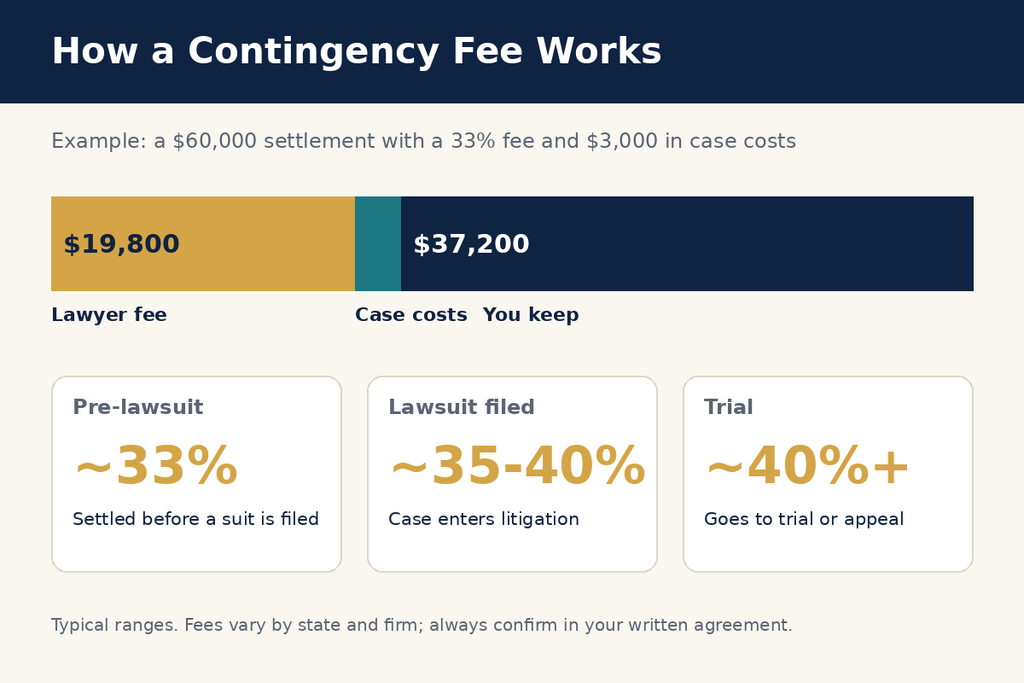
Most personal injury attorneys work on a contingency fee basis. That means you pay no upfront fee and the lawyer is paid only if you win or settle. Their fee is a percentage of the recovery.
Typical ranges in the United States look like this:
- About 33% if the case settles before a lawsuit is filed.
- About 35% to 40% once a lawsuit is filed and the case enters litigation.
- 40% or more if the case goes to trial or appeal.
These are typical figures, not fixed rules. Rates vary by state, firm, and case type, and some states cap fees in certain claims, such as medical malpractice. Always rely on the written agreement you are offered.
Fees vs. Costs: A Crucial Difference
The attorney’s fee is not the only deduction from your settlement. Case costs are the out-of-pocket expenses needed to build your claim, such as:
- Court filing fees
- Medical record retrieval
- Expert witness fees (accident reconstructionists, medical experts, economists)
- Deposition and court reporter charges
- Investigator fees and travel
Ask whether costs are deducted before or after the percentage is calculated. It can change your take-home amount noticeably. Also ask whether you owe the costs if you lose. Many firms absorb them, but some do not.
A Quick Example
Say your case settles for $60,000. With a 33% fee ($19,800) and $3,000 in case costs, you would keep about $37,200 before any medical liens or outstanding bills are paid. That last point matters, because health insurers and hospitals may have a legal right to be reimbursed from your settlement. A good lawyer negotiates those liens down, which can put more money in your pocket.
Where to Find Good Candidates
Start with a shortlist of three to five attorneys, using several sources:
- Personal referrals. Friends, family, or colleagues who have had a good experience.
- Your state or local bar association. Its referral service can connect you with licensed, vetted attorneys.
- Professional directories and ratings. Look for peer-reviewed listings and verified client reviews.
- Other attorneys. If you know a lawyer in a different field, ask for a referral to an injury specialist.
Be cautious of anyone who solicits you right after an accident, whether by phone, text, or in person at a hospital. Aggressive solicitation is a red flag and is restricted in many places.
What to Look for in a Lawyer
Relevant experience. Personal injury is a broad field. A lawyer who handles mostly truck accident claims may be a better fit for your trucking case than a generalist.
A real track record. Ask about similar cases they have handled, typical outcomes, and how many they take to trial. Insurers know which lawyers are willing to go to court, and that reputation influences settlement offers.
Resources. Complex cases require funding for experts and investigations. Ask whether the firm can front those costs for the duration of your case.
Communication. You should know who will handle your case day to day and how quickly they return calls. Many firms use paralegals for routine updates, which is fine as long as you can reach the attorney when it matters.
Good standing. Check your state bar’s website for licensing status and any disciplinary history.
Questions to Ask at the Consultation
Most personal injury lawyers offer a free initial consultation. Treat it as an interview. Bring any documents you have: police or incident reports, photos, medical records, insurance letters, and a list of witnesses. Then ask:
- Have you handled cases like mine, and what were the results?
- Who will actually work on my case?
- What is your fee percentage, and does it change if the case goes to trial?
- How are case costs handled, and do I owe them if we lose?
- What do you think my case is worth, and what are the risks?
- How long might this take?
- How will you keep me updated?
Be wary of any lawyer who guarantees a specific outcome. No honest attorney can promise a result. A candid discussion of strengths and weaknesses is a good sign.
Reading the Fee Agreement
Before you sign, read the retainer agreement carefully. Confirm the fee percentage and when it increases, how costs are deducted, what happens if you switch lawyers, and how medical liens are handled. If anything is unclear, ask for it in plain language. A reputable lawyer will happily explain every line.
What to Expect After You Hire
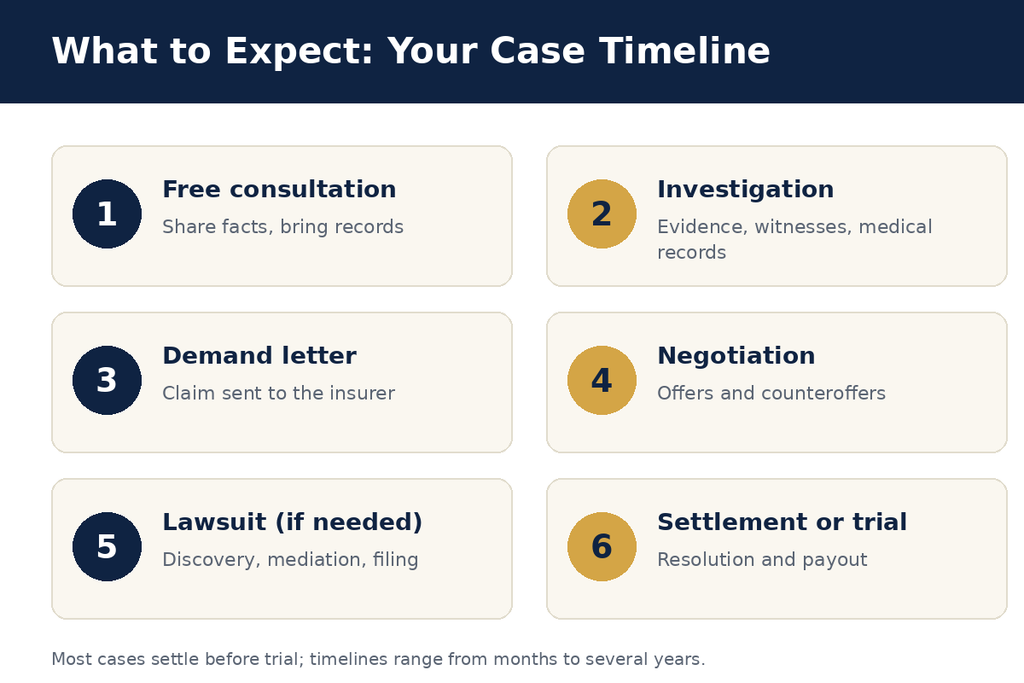
Every case is different, but most follow a similar path.
1. Investigation. Your lawyer gathers evidence: accident reports, photos, surveillance footage, witness statements, and your medical records. Early action matters because evidence can disappear and memories fade.
2. Treatment and documentation. You focus on medical care while your attorney tracks your bills, lost wages, and ongoing symptoms. Follow your doctor’s orders and attend every appointment. Gaps in treatment give insurers an argument that you were not really hurt.
3. Demand letter. Once you reach maximum medical improvement, or your future needs are clear, your lawyer sends a demand letter to the insurer. It lays out liability, your injuries, and the compensation sought.
4. Negotiation. Expect a back-and-forth. The first offer is usually low. Your lawyer will counter, supported by evidence, and your approval is required before accepting any deal.
5. Lawsuit, if necessary. If negotiations stall, your attorney may file suit. This begins discovery, where both sides exchange information and take depositions. Most cases still settle during this stage, often after mediation.
6. Settlement or trial. The large majority of personal injury cases settle before trial. If yours does not, a judge or jury decides. Trials add time and risk but can also produce larger awards.
How Long Will It Take?
Simple claims may resolve in a few months. Cases involving serious injuries or litigation often take one to three years, sometimes longer. Rushing to settle early can be a costly mistake, especially if the full extent of your injuries is not yet known.
Mistakes to Avoid
- Waiting too long. Every state has a statute of limitations, often two to three years but sometimes much shorter, especially against government entities. Miss it and you may lose your right to sue.
- Giving recorded statements to the other side’s insurer without advice.
- Posting on social media. Photos and comments can be used to undermine your claim.
- Accepting the first offer before understanding your long-term needs.
- Skipping medical care, which hurts both your health and your case.
Final Thoughts
Hiring a personal injury lawyer is about finding someone with the right experience, a transparent fee structure, and a communication style you trust. Because most offer free consultations and work on contingency, you can talk to several before deciding, at no cost. Take advantage of that. Compare their answers, read the agreement closely, and choose the person you feel most confident will fight for you.
This article is for general information only and is not legal advice. Laws and fee practices vary by location, so consult a licensed attorney about your situation.
The article runs about 1,200 words, and the three PNGs (1200×630 feature image, plus two 1200×800 infographics) are attached above. Want me to put the article in a Word doc or HTML file with the images embedded, or adjust the images’ colors to match your site?
Please wait…
Your Code
This code is fixed and not randomly generated.