A practical guide · about 7 minute read
Earning $500 a week on the side is $2,000 or more a month, so it is not a casual goal. It is realistic, but usually only when you sell a skill rather than your time at a flat wage. This guide covers side hustles where reaching that level is plausible, how many hours it takes, and which popular ideas rarely get there.
First, the math
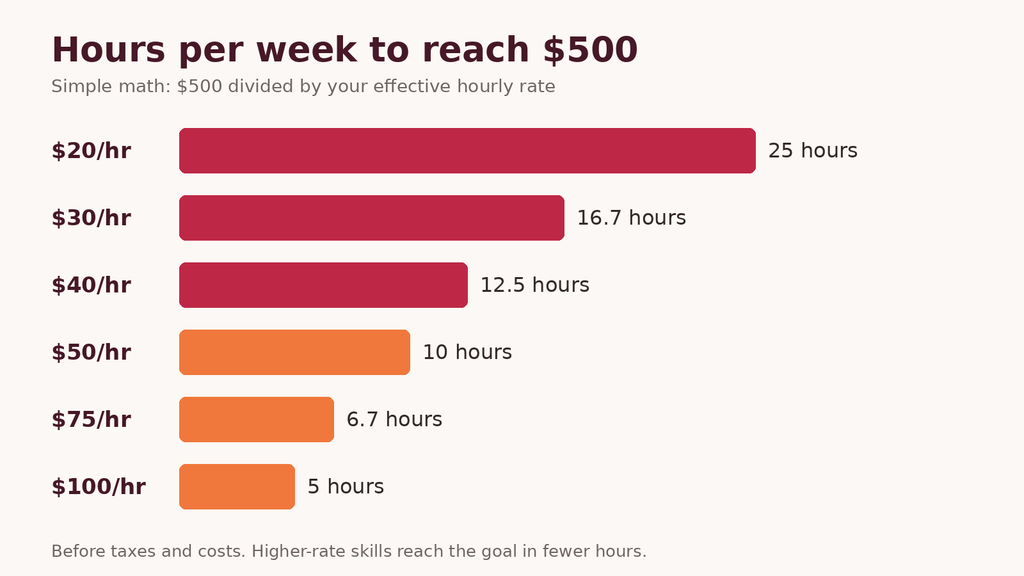
Your hourly rate decides everything. At $20 an hour you need 25 hours a week, which is a second job. At $50 an hour you need only 10. That is why skill-based services dominate high-earning side hustles: the same evening hours are worth more.
Keep in mind that few people start at the top rate. Beginners often earn less for the first one to three months while they build samples, reviews and confidence. Rates also depend on your country, niche and experience.
10 side hustles that can reach $500+ a week
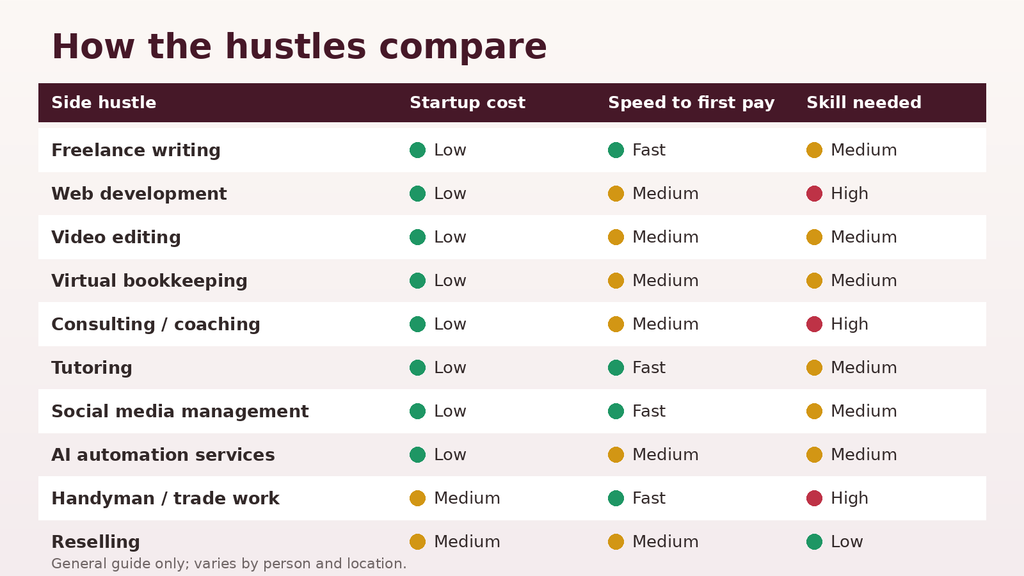
1. Freelance writing and copywriting
Businesses pay for sales pages, emails, case studies and long-form content. Experienced specialists in fields like software, finance and health can charge well above generic writers. To reach $500, aim for two to four steady clients or a monthly retainer. Specializing is the biggest rate booster.
2. Web design and development
Small businesses need new sites, fixes and e-commerce setups. A single project can cover a week’s target, and maintenance plans add repeat income. Learn WordPress, Webflow or Shopify first if you are not a full developer.
3. Video editing
Creators, coaches and brands outsource editing for short clips and long videos. Editors who deliver reliably often get weekly work from one or two creators. Package your service, such as eight edited shorts a week for a fixed price.
4. Virtual bookkeeping
Owners of small businesses hate reconciling accounts. Monthly bookkeeping packages create predictable income, and a few clients can reach the target. Certification in QuickBooks or Xero builds trust, and accuracy matters more than speed.
5. Consulting and coaching
If you have professional experience, sell it. Marketing audits, resume reviews, fitness plans, operations advice and career coaching can command high hourly rates. Five paid sessions a week at $100 reaches the goal.
6. Test prep and specialist tutoring
General homework help pays modestly, but exam preparation, coding, advanced maths and languages pay more. Group sessions raise your hourly earnings, and parents often book recurring weekly slots.
7. Social media management
Local businesses and creators pay monthly retainers for planning, posting and reporting. Three clients at about $200 each a week, or the monthly equivalent, gets you there. Short-form video skills command higher fees.
8. AI automation services
Many small firms want help with workflows, chatbots, document handling and data cleanup. The value is in reliability and saving clients’ time, not in using the tools. Start with one narrow problem, such as automating appointment reminders.
9. Handyman and trade services
Weekend work such as repairs, painting, assembly, plumbing or electrical jobs can pay well per day, depending on licensing rules. This is a hands-on option with fast pay but requires tools, skill and insurance where applicable.
10. Reselling and flipping
Buying undervalued furniture, electronics or collectibles and reselling them can reach $500 a week for sharp sellers. It takes sourcing knowledge, time and upfront capital, and income is uneven. Track costs and fees carefully.
Popular hustles that rarely reach $500 a week
Paid surveys, microtasks, user testing and basic data entry usually pay too little per hour to hit this level. Food delivery and rideshare can look good on gross earnings, but fuel, maintenance, insurance and waiting time cut the real hourly figure, so calculate your net before relying on them. Many dropshipping and print-on-demand stores earn little because competition and advertising costs are high. They are not impossible, but they are not a dependable path to $500 a week.
How to choose the right hustle
Match the option to what you already know. If you have professional expertise, consulting or specialist services give the fastest jump. If you have a technical skill, freelancing is natural. If you have no marketable skill yet, spend a month learning one with high demand before expecting high pay.
Also consider your hours. Evening availability suits clients in other time zones and creator-based work. Weekend availability suits trades and local services. Choose something you can maintain for at least six months without burning out.
How to land your first clients
Start with a clear offer, such as “weekly email newsletters for fitness coaches” rather than “writing services.” Build two or three sample pieces, then contact 10 potential clients each week by email or LinkedIn with a short, specific message about their business. Ask former colleagues and friends for introductions. After each job, request a testimonial and a referral. Once you have a few reviews, raise your price for new clients.
Money matters to handle early
Side income is usually taxable, so keep records of income and expenses from day one. Put a share of each payment aside for taxes, and consider a separate bank account. Use written agreements, invoice promptly, and ask for a deposit on larger projects. Check your employment contract to be sure side work does not conflict with your main job.
What a $500 week can look like
Consider a bookkeeper with three clients paying $650 a month each, plus one extra cleanup project. That is roughly $2,000 a month, or about $500 a week, from around 10 to 12 hours of work. A freelance writer might reach the same figure with two retainers and one one-off article. Notice the pattern: recurring clients make income predictable, while one-off jobs make it uneven. Aim to turn successful projects into monthly agreements as early as possible.
Mistakes that keep people under $500
- Underpricing to win work, then struggling to raise rates later.
- Offering vague services instead of a specific, clearly priced package.
- Relying on one client, which makes income fragile if they leave.
- Spending weeks perfecting a portfolio instead of contacting prospects.
- Ignoring costs, fees and taxes when counting income.
Your four-week plan
- Week 1: Choose one hustle and a specific niche, then set a target rate.
- Week 2: Create sample work and a simple portfolio page.
- Week 3: Pitch 10 prospects daily or apply to relevant platforms.
- Week 4: Deliver your first jobs, collect testimonials and raise your rate.
Hitting $500 a week is a matter of skill, price and consistent selling. Pick one lane, work it for three months, and let the results guide your next move.
General information only, not financial or tax advice. Earnings vary by skill, location and effort and are not guaranteed.
Please wait…
Your Code
This code is fixed and not randomly generated.