A car repair, a medical bill, a sudden layoff. Emergencies rarely announce themselves, and without savings they usually land on a credit card or a high-interest loan. An emergency fund breaks that cycle. It’s money set aside for one purpose: keeping a surprise from becoming a crisis.
The usual advice is to save three to six months of expenses. That’s a good long-term target, but it can feel impossible when money is tight. So this guide starts smaller: build a starter cushion first, then grow it.
Why Even a Small Fund Matters
You don’t need thousands of dollars to feel the benefit. A starter fund of $500 to $1,000 covers many common surprises, such as a tire, a vet bill, or a missed shift. Even that modest amount can keep you from borrowing at 25% interest.
It also changes how you feel about money. With a cushion, a bad week stays a bad week.
Step 1: Set a Starter Goal
Skip the big number for now. Aim for one milestone at a time.
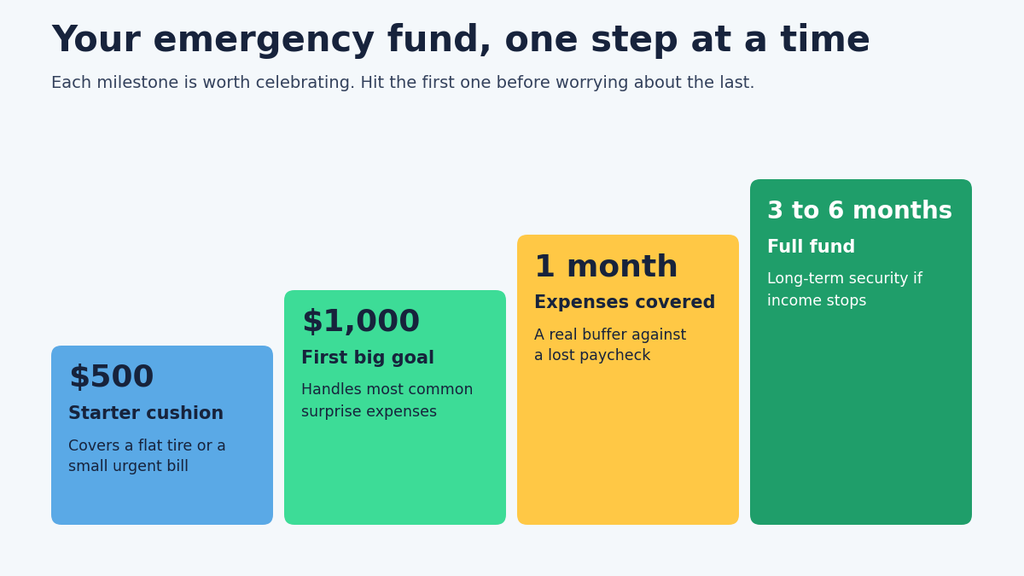
Begin with $500, then move to $1,000. After that, aim for one month of essential expenses, and finally three to six months. To estimate a month of expenses, add up only the must-haves: housing, utilities, food, transport, insurance, and minimum debt payments.
Small goals work because you can win them quickly.
Step 2: Find the Money in Your Budget
Tight budgets still have flexibility, even if it’s small. Spend 30 minutes with your last two months of bank and card statements and look for three things.
Recurring charges you’ve forgotten. Subscriptions, apps, memberships, and free trials that quietly converted to paid plans are common culprits. Cancel anything you haven’t used this month.
Bills you can lower. Call your internet, phone, and insurance providers and ask for a better rate, or switch to a cheaper plan. A single phone call can free up $10 to $30 a month.
Small leaks that add up. Takeout coffee, delivery fees, and impulse purchases rarely feel big individually. Choose one or two to reduce, not everything at once.
You don’t need to find hundreds of dollars. $25 to $50 a week is enough to make real progress.
Step 3: See How Fast Small Amounts Add Up
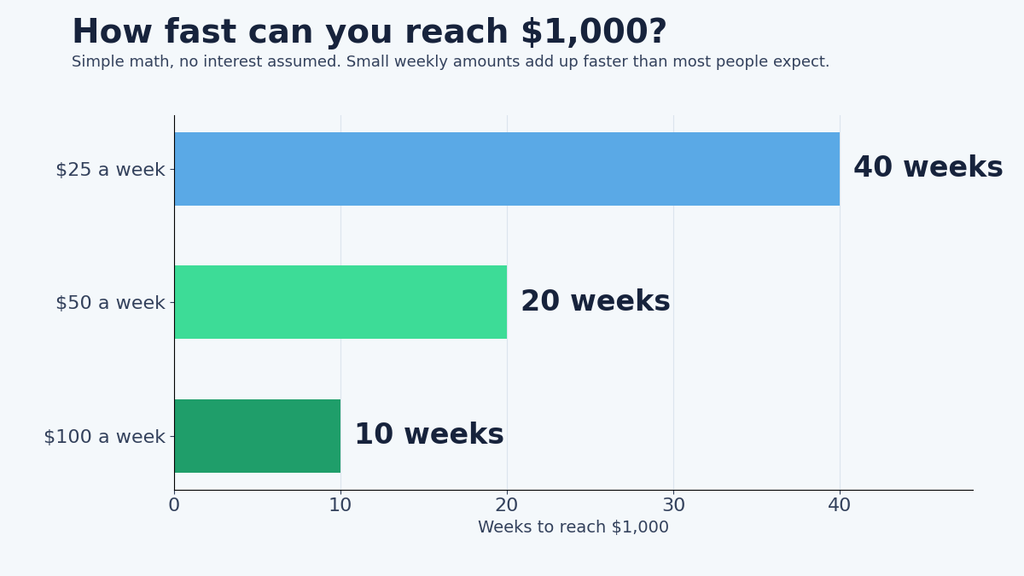
At $25 a week, you reach $1,000 in 40 weeks. At $50 a week, it takes 20 weeks. At $100 a week, just 10. Choose a number that stings a little but doesn’t break your budget. If you can only manage $10 a week, start there and raise it when your income grows.
Step 4: Automate It
Willpower is unreliable. Automation isn’t. Set up an automatic transfer from checking to savings on the day you get paid, so the money moves before you can spend it. This approach is often called “paying yourself first.”
If your employer lets you split your direct deposit, send a fixed portion straight to savings. You’ll adapt to living on the rest faster than you expect.
Step 5: Put the Money in the Right Place
Your emergency fund should be safe, separate, and accessible, but not too accessible.
- Safe: Use a savings account at an insured bank or credit union. In the US, deposits are generally insured up to $250,000 per depositor, per insured institution, per ownership category through the FDIC or NCUA.
- Separate: Keep it apart from your checking account so you aren’t tempted to spend it on everyday purchases.
- Earning interest: A high-yield savings account usually pays much more than a traditional one. Rates change often, so compare current offers before you open an account.
- Not invested: Don’t put emergency money in stocks or crypto. Prices can drop right when you need the cash.
Step 6: Use Speed Boosters
Cutting expenses has limits. Adding income can move the needle faster. Pick one or two of these, not all of them.
- Sell things you don’t use. Electronics, furniture, clothes, and tools can bring in a few hundred dollars over a weekend.
- Take on temporary extra work. Weekend shifts, delivery, freelancing, or tutoring for a few weeks can fund your starter goal quickly.
- Redirect windfalls. Tax refunds, bonuses, cash gifts, and rebates are ideal for a fast jump. Send at least half to your fund.
- Try a no-spend challenge. Pick a week or a month where you only buy essentials. Whatever you didn’t spend goes straight to savings.
- Use round-ups. Many banking apps round purchases up to the next dollar and move the difference to savings.
Step 7: Protect the Fund
An emergency fund only works if it stays for emergencies. A real emergency is usually unexpected, necessary, and urgent. Examples include a medical bill, an essential car or home repair, or a loss of income.
A sale, a vacation, or a new phone is not an emergency. Save for those in a separate goals account. If you do use the fund, don’t feel guilty. Just make refilling it your next priority.
What If You Have Debt?
This is a common dilemma. A sensible approach for many people is to build a small starter fund first, even $500, while making minimum payments on debts. Without that cushion, any surprise expense goes right back on the credit card and undoes your progress.
Once the starter fund is in place, you can put extra money toward high-interest debt, then build the fund toward a full three to six months. Your best order depends on your interest rates and job stability, so adjust it to your situation.
Common Mistakes to Avoid
- Waiting for the perfect budget. Start with whatever you have, even $5.
- Keeping the money in checking. If you can see it, you’ll spend it.
- Treating a want as an emergency. Define “emergency” before you need to decide.
- Giving up after one setback. If you dip into the fund, just restart your contributions.
Your 7-Day Quick Start
- Day 1: Add up your essential monthly expenses.
- Day 2: Review your statements and list recurring charges.
- Day 3: Cancel unused subscriptions and call one provider about a lower rate.
- Day 4: Open a separate savings account.
- Day 5: Set up an automatic weekly or per-paycheck transfer.
- Day 6: List three things you could sell or one extra income idea.
- Day 7: Make your first deposit and write down your $500 target.
The Bottom Line
An emergency fund isn’t built in one big move. It’s built in small, repeatable ones: a canceled subscription, an automatic transfer, a weekend side job, a tax refund that goes to savings instead of spending. Start with $500, automate your contributions, and protect the money for real emergencies. In a few months, you’ll have something worth more than the dollars themselves, which is breathing room.
Disclaimer: This article is for general information only and is not financial advice. Your best approach depends on your income, expenses, debts, and local rules. Consider speaking with a qualified financial professional about your situation.
Please wait…
Your Code
This code is fixed and not randomly generated.