When your credit score is low and an expense can’t wait, such as a car repair, a medical bill, or a gap between paychecks, borrowing can feel like a trap. The good news is that a personal loan is still possible. The catch is that it will cost more, so choosing the right lender matters far more than speed. This guide compares the leading options, explains what they really cost, and shows how to avoid the traps.
What Counts as Bad Credit?
A FICO score below 580 on the 300 to 850 scale is considered bad credit. Lenders that serve this group look beyond the score. They weigh income, employment, and your overall financial situation. badcreditbadcredit
The tradeoff is price. To offset the lender’s risk, these loans usually carry higher interest rates and sometimes higher fees than loans for borrowers with good or excellent credit. That’s why comparing offers is essential. fool
The Lenders Worth Comparing
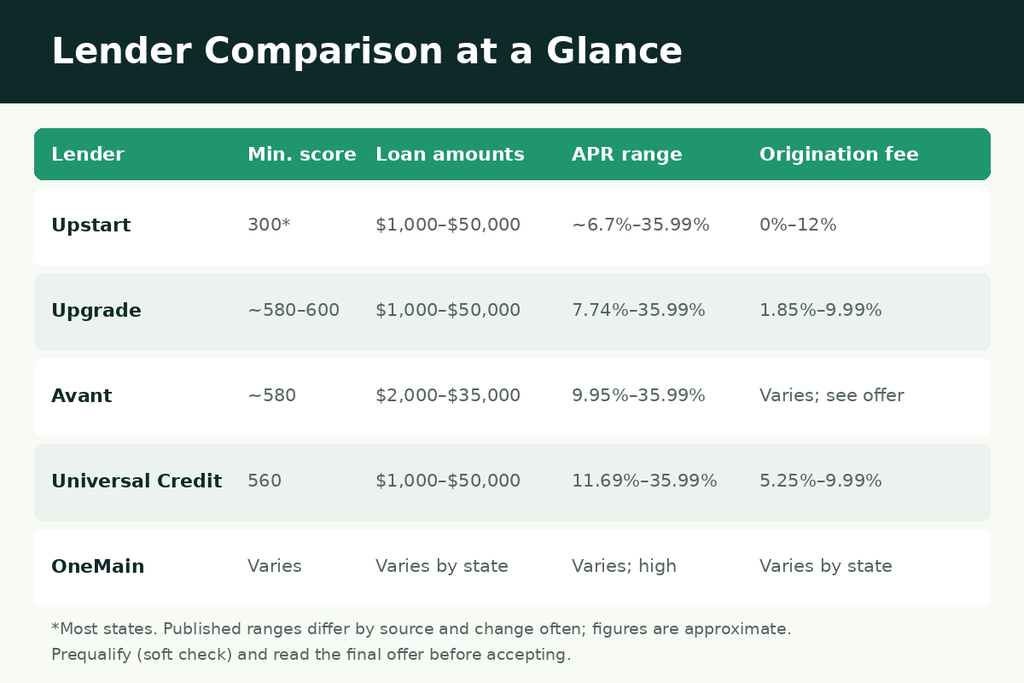
Rates, fees, and minimum scores change often and differ between review sites, so treat the figures below as approximate and confirm them on each lender’s own site.
Upstart: Best for Thin or Very Low Credit
Upstart accepts applications with credit scores as low as 300 in most states, which makes it one of the few lenders willing to consider scores that low. Loans run from $1,000 to $50,000, though the origination fee can reach 12%. There are no prepayment penalties, so you can pay the loan off early without a charge. Please ensure Javascript is enabled for purposes of website accessibility +2
Best for: borrowers with very low scores or a short credit history.
Watch out for: high fees at the top of the range.
Upgrade: Best Overall for Fair-to-Poor Credit
Several reviewers rank Upgrade at or near the top of their bad-credit lists. Its APRs run from 7.74% to 35.99%, with a 1.85% to 9.99% origination fee deducted from the proceeds. One comparison found its late fee is $10, versus $25 at Avant. NerdWallet singles Upgrade out as best for co-signed loans. Best Loans for Bad Credit of February 2026 +2
Best for: borrowers close to the fair-credit range, or those who can add a co-signer.
Watch out for: the fee still comes off the top, so you receive less than you borrow.
Avant: A Fair-Credit Specialist
Avant has been positioning toward fair-credit borrowers since 2012. It offers $2,000 to $35,000 at APRs starting around 9.95%, with a $25 late fee. It suits borrowers who want a lender used to scores below the national average, but its loan ceiling is lower than some rivals. supermoneysupermoney
Best for: fair-credit borrowers with moderate needs.
Watch out for: a higher APR floor than Upgrade or Upstart.
Universal Credit: Best for Credit-Building Features
NerdWallet names Universal Credit best for credit-building tools. Its APRs run from 11.69% to 35.99%, with a 5.25% to 9.99% origination fee. One review calls it a sound option for building credit, though rates are high compared to similar lenders. Advertiser disclosure +2
Best for: borrowers who want to rebuild credit with on-time payments.
Watch out for: the highest fee floor on this list.
OneMain Financial: Best for Same-Day Funding and Auto-Secured Loans
Bankrate names OneMain best for same-day funding. Credit Karma highlights it for auto-secured loans. Putting up collateral can improve your odds, but you risk the asset if you can’t repay. bankratecreditkarma
Best for: urgent needs, or borrowers willing to offer collateral.
Watch out for: rates and fees vary by state and can be steep.
Other Options Worth Knowing
- Best Egg: Offers two ways to secure a personal loan, and secured loans typically have lower rates. nerdwallet
- Oportun: Offers smaller loans from $300 to $10,000. moneylion
- Credit unions: Often cap rates and treat members more flexibly than online lenders. They’re worth a look before you apply anywhere else.
What a High APR Really Costs
An APR near the top of the range is more than a number.
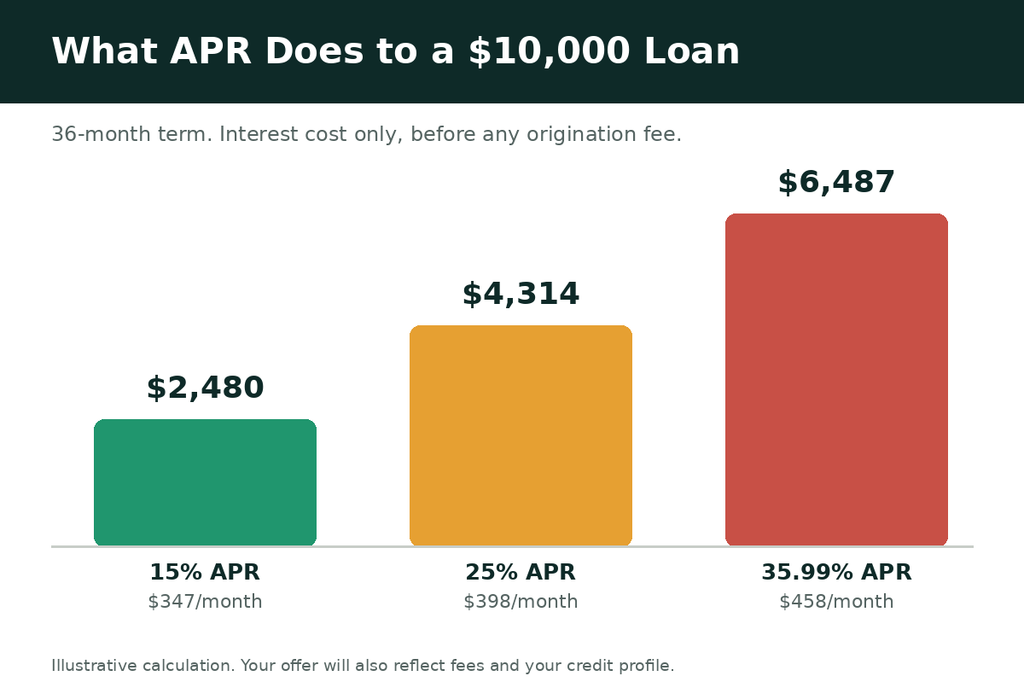
On a $10,000, 36-month loan, interest alone totals about $2,480 at 15% APR, about $4,314 at 25%, and about $6,487 at 35.99%. Monthly payments climb from roughly $347 to $398 to $458. That’s before fees.
Fees matter too. Many fair-credit lenders charge origination fees from 1% to as high as 12%, usually taken from your proceeds, so you should compare APR rather than just the interest rate. A 9% fee on $10,000 means you receive $9,100 but repay the full $10,000 plus interest. If you need exactly $10,000, you must borrow more. moneylion
How to Choose the Right Loan
1. Prequalify with several lenders. The lenders on many top lists offer prequalification that previews your estimated rate without a hard inquiry on your credit reports. Check three to five lenders so you can compare real offers. creditkarma
2. Compare APR, not interest rate. APR includes fees and shows the true yearly cost.
3. Check the monthly payment against your budget. A loan you can’t comfortably repay can push you into a worse position.
4. Look for borrower-friendly terms. No prepayment penalty, low late fees, and reporting to all three credit bureaus all help you.
5. Consider a co-signer or collateral. Co-signed and secured loans often come with better terms. Make sure everyone understands the risk. nerdwallet
6. Research the lender’s reputation. Check the reputation of any lender marketing loans specifically to bad-credit borrowers. creditkarma
Red Flags to Avoid
- Upfront fees before you’re approved. Legitimate lenders deduct fees from proceeds after approval.
- Guaranteed approval promises. No honest lender guarantees approval without reviewing your finances.
- Payday and title loans. Their triple-digit APRs can create a debt cycle that’s very hard to escape.
- Pressure to sign immediately. Real offers stay open long enough for you to read them.
Alternatives Worth Trying First
A personal loan isn’t your only option. Consider these before you commit:
- A credit-builder loan, which is designed to improve your score at low cost. MoneyLion, for example, offers credit-builder loans of up to $1,000. creditkarma
- A credit union loan, especially a small-dollar one.
- A payment plan with the biller, such as a hospital or utility, which often costs nothing.
- Family or friends, if you put the terms in writing.
- Nonprofit credit counseling, which can help you build a repayment plan.
Using the Loan to Rebuild Your Credit
Because a personal loan is an installment loan, on-time payments can raise your score over time. Set up autopay to avoid missed payments, and don’t borrow more than you need. Once your score improves, you may be able to refinance at a lower rate, so check whether your lender charges prepayment penalties. A few months of consistent payments, plus lower credit card balances, can move your score meaningfully.
Final Thoughts
There is no single best lender for everyone. Upstart is worth checking if your score is very low, Upgrade and Avant suit borrowers closer to fair credit, Universal Credit adds credit-building features, and OneMain helps when you need money fast or can offer collateral. Whichever you choose, prequalify with several lenders, compare APRs, and read the fee terms before signing.
This article is for general information only and is not financial advice. Rates, fees, and eligibility change often and vary by state, so confirm current terms with each lender before applying.
Please wait…
Your Code
This code is fixed and not randomly generated.